
Lowest margin
—
—
 Available in US
The sports betting industry has exploded, and with it comes an overwhelming question: which bookmaker should I trust with my money? If you've researched this, you've probably noticed something peculiar—every review site claims to have found the "best" bookmaker, yet they're all recommending different operators.
The sports betting industry has exploded, and with it comes an overwhelming question: which bookmaker should I trust with my money? If you've researched this, you've probably noticed something peculiar—every review site claims to have found the "best" bookmaker, yet they're all recommending different operators.
Here's the uncomfortable truth most affiliate sites won't tell you: there's no universal "best bookmaker" that works for everyone. The operator ideal for a casual weekend bettor looks nothing like the perfect choice for a sharp professional. Someone hunting generous bonuses has completely different priorities than a value bettor obsessing over half-percentage-point margins. The 2026 betting landscape includes over a thousand licensed operators globally, plus countless offshore options, each claiming superiority.
This guide cuts through the noise. Rather than pushing whichever bookmaker pays the highest affiliate commission, we're deconstructing what actually makes a bookmaker worth your money. We'll examine licensing legitimacy, odds quality, withdrawal reliability, and whether they'll let you keep betting after you win. You'll learn which bookmakers match your specific profile, how to verify licensing claims, and why that massive bonus might actually trap your money rather than reward you.
We've analyzed over two hundred bookmakers across regulated and offshore markets, tested withdrawal speeds, calculated actual bonus values, and gotten limited by enough operators to know which welcome winning action. By the end, you'll have a framework for informed decisions rather than gambling on the bookmaker itself before placing your first bet.
Anyone claiming they've found the single "best bookmaker" is either lying or doesn't understand betting. The concept is fundamentally flawed because bettors have wildly different needs, risk tolerances, and priorities. A bookmaker perfect for one person might be unsuitable for another.
Consider the recreational bettor placing five-pound wagers on Premier League matches every weekend. This person values convenience, a user-friendly app, entertaining promotions. They're not concerned whether they're getting minus-110 versus minus-108 odds because at their stakes, the difference is pennies. Compare that to a professional bettor grinding out a living with six-figure annual volume. This person obsesses over every fraction in the odds, needs bookmakers that won't limit their account after winning weeks, and couldn't care less about flashy bonuses with impossible requirements.
Then there's the spectrum between. The value hunter maintaining accounts at eight bookmakers to capture the best price on every bet. The high-stakes player needing operators comfortable with five-figure wagers. The niche specialist betting Korean baseball who needs proper coverage. The crypto enthusiast wanting instant Bitcoin withdrawals. Each demands different priorities.
What genuinely defines a "best" bookmaker comes down to ten core criteria: licensing legitimacy and fund protection, odds quality and margin, bonus structure and realistic value, payment diversity and withdrawal speed, sports and market coverage, platform usability, customer support responsiveness, betting limits and account longevity, additional features like cash out, and overall reputation. Some bettors prioritize the first three heavily while barely caring about the rest. Others have inverted priorities. Understanding which criteria matter most to you personally is the first step.
The reality separating marketing from truth: reputable bookmakers fall into predictable categories. Recreational-focused operators offer generous bonuses and user-friendly interfaces but limit winning accounts fast. Sharp-focused operators welcome professional action, offer better odds with lower margins, and provide higher limits, but typically have minimal promotions. Offshore bookmakers provide flexibility and don't restrict winners, but operate outside your jurisdiction with reputation-based trust. Regulated bookmakers offer legal protection but may have fewer options and will report winnings to tax authorities. Understanding these trade-offs is crucial.

Before getting seduced by welcome bonuses or claims of galaxy-best odds, let's address the only thing that truly matters: will they actually pay you when you win? This fundamental question gets glossed over because frankly, it's less exciting than discussing parlays. But ask anyone who's had their four-figure withdrawal denied by an unlicensed operator, and they'll tell you licensing verification should be your absolute first step.
Legitimate bookmakers operate under licenses from recognized gambling authorities enforcing meaningful standards. These aren't participation trophies—getting licensed by reputable jurisdictions requires substantial financial guarantees, regular auditing, proof of segregated customer funds, and adherence to responsible gambling requirements. The UK Gambling Commission remains the gold standard globally, with rigorous oversight that has resulted in millions in fines against major operators for compliance failures. Malta Gaming Authority holds similar weight in the EU. Gibraltar Gambling Commissioner oversees several well-known operators. In the US, state-specific licenses from New Jersey, Pennsylvania, and Michigan carry legal weight and provide consumer recourse.
Then you have tier-two licenses providing some oversight with less rigorous standards. Curacao eGaming is probably most common, licensing hundreds of offshore operators. It provides baseline legitimacy—these bookmakers submitted to some regulatory framework—but don't expect the same consumer protection as UKGC or MGA licenses. Isle of Man and Kahnawake offer similar middle ground. These aren't necessarily red flags but warrant additional diligence. Many reputable offshore bookmakers operate under Curacao licenses and have maintained solid reputations for decades through fair dealing.
What should terrify you are bookmakers with dubious "licenses" from jurisdictions like Anjouan, or worse, operators claiming they don't need licenses because of magical regulatory loopholes. They don't. Any legitimate bookmaker accepting real-money wagers operates under some licensing, and they'll display this prominently—typically in the website footer with the license number. If you're hunting for license details and finding vague statements about being "fully certified" without specifics, close that tab immediately.
Verifying a license takes five minutes and could save thousands. Find the claimed license information, visit the actual licensing authority's website directly (never click links from the bookmaker—they could be faked), and use the authority's register to confirm the license is current and matches. The UK Gambling Commission has a searchable database. Malta Gaming Authority provides verification. US state regulators publish licensed operator lists. If you can't easily verify, that's your answer—move on.
Beyond licensing, legitimate bookmakers employ proper security. Look for SSL encryption indicated by the padlock icon in your browser. Check that payment processing partners are reputable names. Read terms around fund segregation—customer deposits should be held separately from operational funds, ensuring your money remains protected even if the company faces difficulties. Responsible gambling tools should be readily available, including deposit limits, reality checks, and self-exclusion. These aren't optional extras; regulated bookmakers are required to implement them.
Here's something most reviews won't tell you: licensing jurisdiction matters not just for consumer protection, but for how the bookmaker treats you if you start winning. Bookmakers operating under strict regulatory oversight face more scrutiny if they engage in arbitrary account closures or refuse legitimate winnings. They can still limit your stakes if you're consistently profitable—and absolutely will—but they're constrained in simply stealing your money. Offshore bookmakers have more freedom, which cuts both ways. Reputable offshore operators with established track records generally treat customers fairly because their business depends on reputation.
Bookmaker margin · value calculator
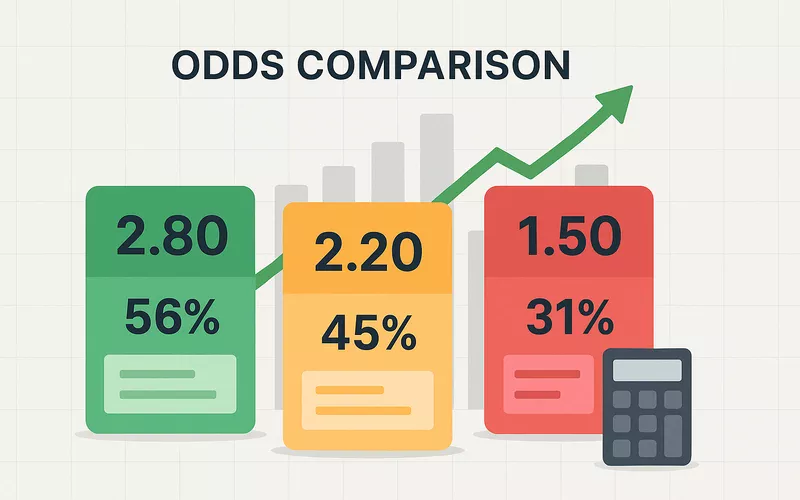
Compare the margins of different bookmakers for the same market. Enter odds from up to 8 bookmakers and see who offers the best value — the lowest margin means more money back to you.
The margin (overround) is the bookmaker's built-in advantage. Lower margin = better for you. A 1-2% difference in margin can cost you hundreds over a year of betting. Always compare before placing your bet.
A value bet exists when your probability estimate is higher than the implied probability from the odds. The edge is your mathematical advantage. Even a small edge (2-3%) can be profitable over hundreds of bets.
For informational purposes only — odds and margins vary by bookmaker. Gambling can be addictive. Play responsibly. 18+.
Most bettors obsess over finding the biggest bonus while ignoring the factor that will have a hundred times more impact on profitability: odds quality. This might be the most important section if you're betting regularly, yet it's where bookmakers successfully bamboozle casual bettors with clever misdirection.
Every bookmaker builds a profit margin into their odds, and this margin represents the long-term mathematical edge the house holds over you. It's called the overround, vig, or juice, and it's how bookmakers guarantee profitability regardless of outcomes. Think of a fair coin flip where both heads and tails should be offered at even money. A bookmaker might offer both at minus-110, making you risk one hundred ten to win one hundred. That ten-dollar difference represents their margin—guaranteed profit whether the coin lands heads or tails.
The brutal mathematics: if you're betting at a bookmaker with five percent margin versus seven percent, and you place similar volume at both yearly, the higher-margin bookmaker is literally extracting two percent more of your total volume. On fifty thousand dollars annual betting volume, that's an extra thousand dollars you've donated to the house. Odds quality directly determines how much you're paying to place bets, and bettors ignoring this hemorrhage money unnecessarily.
Typical margins vary significantly by sport and league. Major football markets in highly liquid leagues like Premier League typically carry four to six percent margins at competitive bookmakers. American sports like NFL and NBA usually sit around four and a half to six percent. Tennis on ATP or WTA tours runs five to seven percent. These are mainstream markets where bookmakers compete aggressively. Lower-tier competitions or less popular markets often see margins balloon to eight, ten, or twelve percent because bookmakers face less competitive pressure.
Not all bookmakers price markets equally. Operators like Pinnacle built their entire business on offering the sharpest odds available, with margins around two percent on major markets. They compensate for thin margins by accepting larger stakes from professionals and using that sharp action to set lines accurately, profiting from volume rather than massive margins. Contrast this with recreational-focused bookmakers running six to eight percent margins because they're spending millions on advertising and bonuses, needing higher margins to subsidize customer acquisition.
The difference between mediocre and excellent odds is quantifiable. Betting NFL spreads at standard minus-110 versus reduced juice at minus-105, that five-cent difference changes your required breakeven win rate from fifty-two point four percent to about fifty-one point two percent. That might not sound dramatic, but across hundreds of bets, it's the difference between bleeding money and having a legitimate shot at profitability.
Bookmakers with consistently superior odds share characteristics. Pinnacle stands alone at the top, accepting sharp action and using it to set market-leading prices. Bookmaker and Heritage Sports offer competitive odds with reduced juice on many markets, particularly Heritage's standard minus-108 pricing. SBOBET dominates Asian markets with sharp pricing on football. Betting exchanges like Betfair eliminate traditional bookmaker margins entirely by facilitating peer-to-peer betting, charging commission instead.
Smart bettors implement odds shopping that treats finding the best available price as seriously as handicapping. This means maintaining funded accounts at multiple bookmakers, checking odds across those accounts before each bet, and consistently taking the best price available. Odds comparison websites like OddsChecker streamline this, showing which bookmaker currently offers the best price. Some bettors use multiple browser tabs logged into different bookmakers, manually checking prices. It's tedious, but would you shop at a store charging twenty percent more than the competitor across the street? Yet bettors routinely ignore similar price differences because they're not immediately obvious.
One critical point: live betting odds typically carry higher margins than pre-match odds because bookmakers face increased risk managing rapidly changing in-play markets. That football match showing five percent margin pre-match might jump to seven or eight percent once the whistle blows. This doesn't mean live betting is always negative expected value, but you're paying a premium for real-time action.
Nothing generates more confusion, unrealistic expectations, and bitter disappointment than bookmaker bonuses. Walk into any betting forum and you'll find threads from frustrated bettors who thought they were getting five hundred dollars free only to discover that actually withdrawing winnings requires completing some Kafkaesque series of wagering requirements seemingly designed by someone who hates money.
Let's establish foundational reality: bookmakers don't give away free money out of generosity. Bonuses are customer acquisition costs disguised as rewards, and every legitimate operator structures them to remain profitable even accounting for bonus payout. That massive percentage-match exists because data shows most customers either won't complete wagering requirements or will lose more than the bonus value trying. The house always wins, and bonuses ensure that remains true while creating the illusion of value.
The most common structure is matched deposits, where the bookmaker matches your initial deposit by some percentage up to maximum amount. Deposit five hundred, get five hundred bonus, sounds great. Then you read fine print and discover you need to wager that bonus through fifteen times at minimum odds of 1.80 before withdrawing anything. Let's do the math bookmakers desperately hope you won't: fifteen times five hundred equals seven thousand five hundred in required wagering. Betting seven thousand five hundred at realistic odds with built-in bookmaker margin means you'll statistically lose around three to four hundred completing that requirement. Congratulations, your "free" five hundred cost you several hundred in expected losses.
Rollover requirements represent the primary value killer. Also called wagering requirements or playthrough, these specify how many times you must bet the bonus amount before it converts to withdrawable cash. The mathematics work against you because each bet faces the bookmaker's margin, and that compounds across required wagers. A five times rollover at five percent margin theoretically costs about twenty-five percent of bonus value in expected losses. A twenty times rollover? You're better off declining the bonus and betting your own money at sharp bookmakers.
Minimum odds requirements add another value destruction layer. Many bonuses specify wagers only count toward rollover if placed at odds above a certain threshold, commonly 1.50, 1.80, or 2.00 decimal. This prevents safely grinding out the requirement with heavy-favorite bets, forcing you into markets with genuine risk. Combined with rollover requirements, minimum odds restrictions often render bonuses worthless or negative expected value.
Time limits create artificial pressure leading to poor decisions. Having seven days to complete twenty-times rollover on a thousand-dollar bonus means churning through twenty thousand in bets within a week, likely forcing you to bet markets you haven't researched or wouldn't normally touch. This isn't accidental—bookmakers know rushed betting leads to mistakes and time pressure prevents waiting for genuine value opportunities.
The most genuine bonus value comes from structures minimizing friction and maximizing realistic extraction chances. Risk-free bet promotions where your first losing wager is refunded as a free bet can offer solid value if you're placing that bet anyway. No rollover means the free bet represents pure upside. Enhanced odds on specific events where the bookmaker temporarily boosts the price can be legitimately positive expected value if you were backing that outcome regardless. Some offshore bookmakers like Heritage Sports offer simple cashback structures with minimal or no rollover—a percentage of your action returned quarterly—providing clear value without jumping through hoops.
Loyalty programs and reload bonuses for existing customers often carry better terms than welcome bonuses because these operators are retaining profitable customers rather than acquiring new ones. Monthly reload bonuses with reasonable rollovers, reduced juice for volume bettors, and VIP programs with genuine perks can add incremental value.
Bonuses you should avoid share characteristics: massive percentages (three hundred percent matches almost always hide impossible requirements), extremely high rollover requirements (twenty times or higher), very short time limits (less than two weeks), low minimum odds excluding most genuine opportunities, and confusing terms making calculating actual expected value nearly impossible. If you need a law degree and calculator to figure out whether a bonus might be worth pursuing, it probably isn't.
Here's brutal truth about bonus hunting: unless you're extremely disciplined, have access to exchanges for hedging, and focus exclusively on low-rollover offers from multiple bookmakers, it's a grinding way to make small amounts while risking having accounts limited at bookmakers you might have wanted long-term. Many successful bettors simply ignore bonuses entirely, preferring to maintain good standing at sharp bookmakers with sustainable odds rather than burning through accounts to extract marginal bonus value.
Here's a test of a bookmaker's character: try withdrawing a meaningful amount. The deposit process is always smooth and instant—they'll happily take your funds via any method. But when you want your winnings back? Suddenly there are verification requirements, processing delays, restricted withdrawal methods, suspicious review periods, and documentation requests that weren't mentioned during deposit. The gap between deposit convenience and withdrawal reality tells you everything about an operator's integrity.
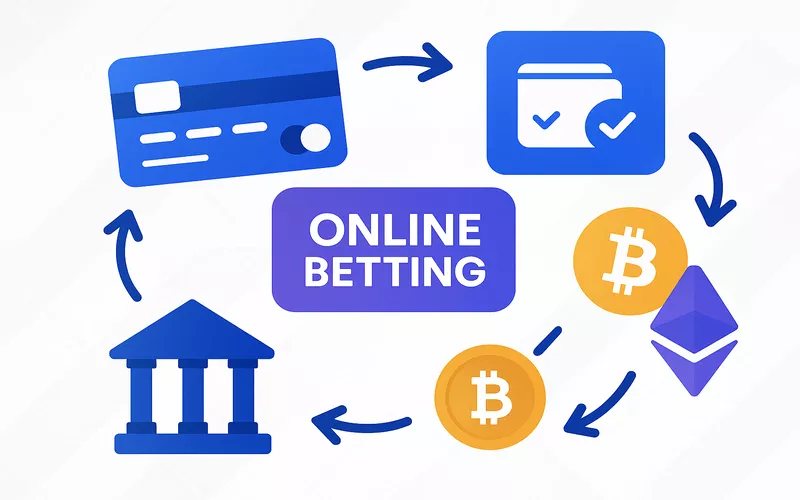
Legitimate bookmakers offer diverse deposit options because they understand bettors have different preferences. Credit and debit cards remain most common, with Visa and Mastercard accepted nearly universally at regulated operators. E-wallets like PayPal, Skrill, and Neteller provide instant deposits with privacy since your banking details never reach the bookmaker directly. Bank transfers work for larger deposits where instant processing isn't critical. Prepaid cards like Paysafecard appeal to bettors preferring not to link banking information. Increasingly, cryptocurrency deposits via Bitcoin, Ethereum, or Tether have become standard, particularly at offshore bookmakers where traditional banking faces more friction.
Withdrawal method selection, however, often proves far more limited. Many bookmakers require withdrawals via the same method used for depositing, ostensibly for security and anti-money-laundering compliance. If you deposited via credit card, you're stuck with credit card withdrawals, which can be frustratingly slow. Some payment processors impose withdrawal limits creating additional hoops—you might need to withdraw via bank transfer for amounts exceeding thresholds even if you deposited via e-wallet. Cryptocurrency has emerged as the superior withdrawal option for bettors who can navigate it, offering processing times measured in hours rather than days and minimal fees.
Processing times separate professional operators from pretenders. E-wallet withdrawals at top bookmakers process within hours, often same day. Credit and debit card withdrawals typically take three to five business days, though some operators push this to a week or more. Bank transfers run three to seven days depending on institutions. Cryptocurrency withdrawals should process within hours, and any bookmaker taking longer is likely batching transactions to save fees—not a good sign.
Verification requirements create legitimate friction bettors need to anticipate. Know Your Customer and Anti-Money Laundering regulations require licensed bookmakers to verify your identity, address, and payment method ownership. This typically involves submitting government-issued ID, recent utility bill or bank statement showing address, and images of payment cards or e-wallet accounts. Smart bettors handle this verification immediately upon account creation rather than waiting until they want to withdraw, avoiding frustration of requested payouts sitting pending while you scramble gathering documents.
Withdrawal limits, both minimum and maximum, constrain flexibility. Minimum withdrawal thresholds, commonly ten to twenty dollars, prevent frivolous micro-withdrawals costing bookmakers more in processing fees than they're worth. Maximum withdrawal limits per transaction or per day create problems for high-stakes bettors with five-figure balances. Some bookmakers cap withdrawals at a few thousand per transaction, requiring multiple requests. Others impose daily or weekly limits extending full withdrawal over weeks.
Fees represent another area where bookmakers show true colors. Legitimate operators absorb withdrawal fees as cost of business, particularly for standard methods like e-wallets where fees are minimal. Some bookmakers charge fees for certain withdrawal methods—commonly bank transfers or multiple withdrawals within specific timeframes. A few shady operators charge fees on every withdrawal, essentially imposing a tax on accessing your own money. This should be an immediate red flag.
Same-day withdrawal bookmakers have become a meaningful competitive differentiator. Operators like Bet365 in the UK, and several US-regulated books like FanDuel and DraftKings, have invested in systems that verify and process withdrawals within hours for established customers. Offshore operators handling cryptocurrency can process even faster, with some completing Bitcoin withdrawals under an hour. This responsiveness signals operational competence and customer-friendly priorities.
A bookmaker might tick every box for licensing, odds, and withdrawals, but if they don't cover the sports and markets you want, they're useless. Sports coverage depth varies dramatically between operators depending on target markets, operational scale, and strategic focus.
The mainstream sports serve as baseline standard. Every legitimate bookmaker covers major football leagues (Premier League, La Liga, Serie A, Bundesliga, Ligue 1), Champions League and Europa League, major American sports (NFL, NBA, MLB, NHL), top-tier tennis (ATP, WTA, all Grand Slams), and biggest events in golf, cricket, and rugby. If a bookmaker doesn't offer comprehensive markets on these mainstream sports, they're either a niche specialist or not serious.
Market depth on individual events separates adequate from excellent coverage. It's not enough for a bookmaker to offer Manchester United versus Liverpool with just match result, both teams to score, and total goals. Top bookmakers provide a hundred or more markets per major football match: first goalscorer, correct score, both halves result, handicap betting at multiple lines, player shots, corners, cards, and more. Similar depth should exist for NBA games with player props on points, rebounds, assists, threes made, and team-specific markets.
Niche sports coverage reveals whether a bookmaker genuinely serves diverse betting interests. If you're passionate about Korean baseball, Scandinavian handball, or Australian Rules football, most mainstream bookmakers won't cut it. You'll need operators with specific strengths—SBOBET for Asian sports, specialized bookmakers for American college sports beyond major conferences, European operators for comprehensive football including lower leagues.
Live betting availability has become table stakes. In-play markets should cover all major sports with constantly updating odds, allowing you to bet on games as they unfold. Quality varies substantially—some bookmakers offer robust in-play markets with quick updates and minimal lag, while others provide bare-bones coverage with slow adjustments making timing frustrating.
Esports betting has transitioned from niche to mainstream at many bookmakers, reflecting massive growth in competitive gaming. CS:GO, League of Legends, Dota 2, and Call of Duty now receive serious coverage at major operators, with markets extending beyond simple match winners to include map betting, round totals, and player props.
Politics and novelty betting provide entertainment value. Want to bet on election outcomes, Academy Award winners, or the next James Bond actor? Some bookmakers offer these markets, though typically with higher margins reflecting difficulty in pricing non-sporting events. Offshore bookmakers generally provide more freedom here.
Once you've verified fundamentals—licensing, odds, payments, coverage—the differentiating features become visible. These tools and options don't affect every bet but become invaluable in specific situations, often separating genuinely customer-focused bookmakers from those doing bare minimum.
Cash out functionality lets you settle bets before the event concludes, locking in profits or cutting losses. When you've backed a football team to win and they're ahead by a goal with ten minutes remaining, cash out lets you secure most potential profit rather than sweating final moments. The value depends entirely on the price the bookmaker offers—they're not being generous, they're offering less than fair value to buy your bet back. Smart bettors use cash out selectively, typically when circumstances have changed significantly since placing the bet.
Bet builder tools let you construct custom bets by combining multiple selections from the same event into a single wager. Want to bet on over 2.5 goals, both teams to score, and a specific player to score in the same football match? Bet builders make this possible. The catch—there's always a catch—is bookmakers can manipulate correlation between selections to offer worse value than if those markets were available independently.
Live streaming integration provides massive convenience for bettors wanting to watch events they're betting on. Some bookmakers stream hundreds of thousands of events annually, from major sports to obscure tennis challengers. The usual requirement is having a funded account or having placed a bet on the event. Quality varies from excellent HD streams to janky, laggy feeds.
Statistics and data feeds integrated into the betting interface help informed decision-making without tabbing between websites. Seeing recent form, head-to-head records, injury reports, and performance statistics directly on the bet placement screen is convenient. Depth and quality varies wildly. Some bookmakers provide superficial information, others partner with data companies to offer comprehensive statistics.
Early payout offers, where bookmakers pay out your bet as winner if your team gains a certain lead, provide risk reduction at no cost. The classic example is football bets paying out if your team goes two goals ahead, even if they subsequently blow the lead. From pure expected value perspective, you're giving up small probability of winning from behind comebacks in exchange for security on leads.

Betting has become mobile-first for most people, and bookmakers failing to deliver excellent mobile experiences lose customers faster than they can acquire them. Whether through dedicated apps or mobile-optimized websites, your ability to place bets quickly and reliably from your phone determines how much you'll actually use the bookmaker.
Native apps versus mobile sites represents a declining distinction as technology has improved. Dedicated iOS and Android apps provide slightly better performance, tighter integration with device features like Face ID and push notifications, and sometimes cleaner interfaces optimized for small screens. Mobile-optimized websites accessed through your phone's browser eliminate the need to download anything and update instantly without requiring new app versions.
Speed and reliability are non-negotiable on mobile. When you're trying to place a live bet on an event happening right now, delays of even seconds cost you the price you wanted or cause you to miss the opportunity entirely. The best mobile platforms load instantly, update odds in real-time without lag, and let you navigate between markets smoothly.
Interface design on small screens requires thought many bookmakers didn't invest in. Can you easily find the sport and event you want without excessive scrolling? Is the bet slip clear about what you're betting? Are buttons sized appropriately for finger taps rather than mouse clicks? The best designs feel intuitive immediately, while poor designs make you constantly zoom and hunt for basic functions.
Push notifications done right provide useful information without becoming spam. Alerts about bet settlements, odds boosts on events you care about, or upcoming matches involving your tracked teams add value. Alerts about every promotional offer become annoyance you quickly disable. The ability to customize notification preferences separates thoughtful apps from pushy ones.
Biometric login through Face ID or fingerprint scanning provides security without the friction of typing passwords on phone keyboards. This seems minor until you're trying to place a quick bet and not fumbling with passwords makes the difference between getting action in or missing it.
Customer support quality becomes invisible when everything works perfectly, but when something goes wrong—and eventually something will—responsive, knowledgeable support makes the difference between a minor annoyance and a major problem souring your entire relationship with the bookmaker.
Live chat has become the expected standard, ideally available twenty-four seven. Quality varies from genuinely helpful agents who solve problems immediately to glorified chatbots following scripts that can only handle basic questions. Test live chat before depositing by asking specific questions about verification requirements or withdrawal processing. Responses within a minute or two suggest adequate staffing. Wait times exceeding five minutes or receiving canned responses not addressing your question indicate understaffed or poorly trained support.
Email support serves as fallback for complex issues requiring research or documentation. Response times within twenty-four hours are acceptable, within twelve hours is good, within a few hours is excellent. Multi-day response times or receiving automated replies that don't address your actual question signal problems.
Phone support has become increasingly rare as bookmakers shift everything to digital channels, but some operators still maintain phone lines, particularly for VIP customers. The advantage of phone support is immediate back-and-forth conversation resolving issues faster than email chains. The disadvantage is no written record unless you're recording calls.
FAQ sections and help centers should address common questions comprehensively without requiring you to contact support. Account verification requirements, deposit and withdrawal procedures, bonus terms, betting rules—all should be documented clearly. Bookmakers with extensive, searchable help sections reduce the need for support contacts.
Complaint escalation processes matter when you have genuine disputes that front-line support can't resolve. Regulated bookmakers must provide formal complaint procedures, typically involving escalation to a manager or compliance team, with timelines for resolution and information about contacting the licensing authority if unsatisfied. Offshore bookmakers have less formal processes, relying on reputation to ensure fair dealing.
One of the most consequential choices you'll make is whether to focus on regulated bookmakers operating under your local jurisdiction's licensing or offshore operators based in gambling-friendly jurisdictions but serving customers globally. This decision isn't purely about legality—it's about trade-offs between consumer protection and betting freedom, convenience and value, peace of mind and flexibility.
Regulated bookmakers operate under licenses from your local gambling authority, subjecting them to comprehensive oversight designed to protect consumers. In the US, this means state-specific licenses from gaming commissions. In the UK, it's the Gambling Commission. The advantages are tangible: your funds are protected through segregation requirements, you have official recourse if disputes arise, advertising and promotional practices face scrutiny, responsible gambling tools are mandatory, and the bookmaker must comply with local laws around data protection and tax reporting.
The disadvantages become apparent when you start winning consistently. Regulated bookmakers serving recreational markets will limit or close profitable accounts without hesitation because their business models depend on losing customers. Marketing costs and license fees that justified getting regulated need to be recovered from customer losses, not from vig on balanced books. Account restrictions happen faster and more aggressively at regulated operators. Additionally, regulated bookmakers typically offer less market variety because regulations constrain what can legally be offered.
Tax implications with regulated bookmakers are straightforward but costly for winners. In the US, regulated books report winnings exceeding six hundred dollars to the IRS. State-level taxes may also apply. You're legally required to report all gambling income, but regulated operators make sure tax authorities know. Offshore bookmakers don't report to tax authorities, though you're still legally obligated to report income yourself.
Offshore bookmakers operate from jurisdictions with favorable gambling regulations—commonly Curacao, Costa Rica, or Panama—and serve customers globally without being bound by each customer's local laws. The advantages attract serious bettors: they generally don't restrict winning players because their model is vig-based rather than dependent on losing customers, they offer higher betting limits often into five and six figures, they provide more betting market freedom including politics and entertainment, and they frequently have better odds with lower margins. Cryptocurrency payments are standard and fast, and they don't report your activity to your local tax authority.
The disadvantages create genuine risk: you have no legal recourse in your jurisdiction if disputes arise, you're relying on the bookmaker's reputation rather than regulatory oversight, if the bookmaker decides not to pay you there's no gaming commission to complain to, and the legal gray area varies by jurisdiction. Additionally, payment processing can be more challenging.
The reputation-based trust model offshore bookmakers operate under works reasonably well for established operators that have been paying customers for decades. Bookmakers like Heritage Sports, Bookmaker, and BetOnline have maintained operations since the 1990s specifically by treating customers fairly, understanding that offshore status means reputation is everything. Newer offshore operators warrant extreme caution.
Who should choose which? Recreational bettors in jurisdictions with good regulated options should probably stick with regulated bookmakers for consumer protection and convenience. Serious bettors or professionals should strongly consider offshore options because account restrictions at regulated books are essentially guaranteed. High-stakes bettors need offshore bookmakers because regulated books won't accept bet sizes that matter.
Many experienced bettors use a hybrid approach: maintaining some regulated accounts for convenience while keeping offshore accounts as their primary betting platform. This diversification provides backup options and flexibility while letting you capture advantages from both worlds.
Not every bookmaker deserves your business, and some actively seek to separate you from your money through deception, unfair practices, or outright fraud. Recognizing red flags before depositing can save you from experiences ranging from frustrating to financially devastating.
Unrealistic bonus offers serve as perhaps the most reliable scam indicator. When you see five hundred percent deposit bonuses or thousand-dollar risk-free bets with no visible catch in marketing, there's absolutely a catch buried in terms. No legitimate bookmaker offers genuinely free money at scale without either impossible requirements or outright intention never to pay out.
Missing or fake licensing information should trigger immediate skepticism. Every legitimate bookmaker prominently displays license information, typically in the footer, including the licensing authority and license number. If you're hunting for this information and finding vague claims about being "fully certified" without specifics, close the tab.
Negative reviews specifically about non-payment should be disqualifying. Every bookmaker collects some negative reviews, but a pattern of complaints about refused withdrawals, closed accounts after wins, or invented terms violations indicates an operator you should avoid. Forums like TheRX, SportsBookReview, and Reddit communities surface these experiences.
Poor website quality including spelling errors, broken links, and outdated information indicates unprofessional operation. Legitimate bookmakers invest in their web presence because it's their primary customer interface. A janky website suggests either a scam operation thrown together quickly or an incompetent bookmaker unlikely to properly handle payments.
Aggressive marketing tactics that pressure immediate deposits, limited-time offers requiring you to act right now, or unsolicited contact urging you to deposit all suggest predatory behavior. Legitimate bookmakers market aggressively, but they're not calling your phone or spamming your inbox with urgent messages.
Payment processor partnerships reveal legitimacy. If a bookmaker accepts Visa, Mastercard, PayPal, or other major processors, those companies have vetted them. Major payment processors won't work with obvious scams. Bookmakers that only accept cryptocurrency or sketchy payment methods may be unable to secure legitimate processing relationships.
Unresponsive or hostile customer support when you ask basic questions before depositing tells you how they'll treat you once they have your money. Test support by asking about verification requirements or withdrawal times. If you can't get straight answers or agents are evasive, imagine how they'll behave when you want to withdraw winnings.

You've absorbed information about licensing, odds, bonuses, payments, features, and the regulated versus offshore distinction. Now comes the practical question: how do you actually choose? This framework provides a structured approach.
Start by defining your betting profile honestly. Are you a recreational bettor placing occasional fun bets? A serious hobbyist treating betting as a skill game? A professional deriving income from betting? A bonus hunter? A high-stakes player? Your profile determines which criteria matter most.
Prioritize your non-negotiables next. What factors are absolute deal-breakers? Most bettors should include licensing legitimacy near the top. Some need specific sports coverage. Others require cryptocurrency options. Still others refuse bookmakers that restrict winning players. List your top three to five must-haves and use them to filter ruthlessly.
Shortlist based on licensing and jurisdiction. If you're in the US and prefer regulated options, you're limited to bookmakers licensed in your state. If you're open to offshore, you're looking at operators under Curacao, Costa Rica, or similar jurisdictions with established track records. This step cuts hundreds of possibilities down to dozens.
Compare odds quality on markets you typically bet. Take five to ten events you would realistically bet on and check odds across your shortlisted bookmakers. Calculate the implied margins. See which operators consistently offer better prices. This practical exercise reveals actual value differences.
Evaluate bonuses realistically using the framework discussed earlier. Calculate actual expected value accounting for rollover requirements, time limits, and minimum odds restrictions. If a bonus offers positive expected value with reasonable completion probability, factor it into your decision. If it's neutral or negative EV, ignore it entirely.
Test with a small deposit before committing significant funds. Deposit fifty to a hundred dollars and go through the complete cycle: place a few bets across different markets, request a withdrawal to test the process and timeline, interact with customer support, and try the mobile experience. This test costs minimal risk while revealing how the bookmaker actually operates.
Verify the withdrawal process first-hand rather than trusting descriptions. The single most important test is whether they pay you promptly. During your test period, make a withdrawal even if you don't need the money yet. See how long verification takes. Note processing times. Confirm money arrives. This provides invaluable peace of mind.
Expand to multiple bookmakers for odds shopping once you've validated two or three operators meeting your criteria. Maintaining accounts at three to five bookmakers lets you capture the best available odds on every bet, compounding into significantly better long-term results. This multi-account strategy is standard among serious bettors.
The portfolio approach treats bookmakers as tools for different purposes rather than searching for one perfect operator. You might use one sharp offshore bookmaker for main action because they have excellent odds and don't restrict winners. You maintain a regulated account for convenience. You keep a third account at an exchange for large bets. Each serves its purpose.
Continuously evaluate based on actual performance. Markets evolve, bookmakers change approaches, new operators enter with better offerings, and your needs shift. Revisit your bookmaker choices periodically—maybe quarterly or annually—to ensure they still serve you well. Loyalty to bookmakers makes no sense when dozens of alternatives exist.
A trustworthy bookmaker operates under a recognized license from reputable authorities like the UK Gambling Commission, Malta Gaming Authority, or legitimate state regulators. They use SSL encryption to protect data and segregate customer funds from operational capital. Transparent terms, positive reputation verified through independent reviews, responsive customer support, and consistent withdrawal processing within advertised timeframes all contribute to trustworthiness. Before depositing, verify the license directly with the issuing authority, read user experiences on neutral platforms, and test customer support. Trustworthiness ultimately reveals itself through consistent fair dealing over years, so favor established bookmakers with long track records over new operators making big promises.
The choice depends on your betting profile, priorities, and risk tolerance. Regulated sportsbooks offer legal protection, consumer safeguards, and official recourse through gaming commissions. However, they typically limit winning accounts, offer lower betting limits, may have less competitive odds, and report winnings to tax authorities. Offshore sportsbooks generally don't restrict winning players, accept higher limits often into five and six figures, usually offer better odds, provide more betting market freedom, and don't report activity to tax authorities. The trade-off is operating outside your jurisdiction with reputation-based trust and no legal recourse if problems arise. Recreational bettors in jurisdictions with quality regulated options benefit from consumer protection. Serious bettors and professionals should consider offshore options because account restrictions at regulated books are virtually guaranteed for consistent winners.
Getting the best odds requires actively comparing prices across multiple bookmakers for every bet, understanding that different operators offer varying odds on identical events. Use odds comparison websites like OddsChecker or OddsPortal to quickly see which bookmaker currently offers the best price. Maintain accounts at three to five bookmakers minimum, ensuring at least one sharp operator like Pinnacle or an exchange. Learn to calculate bookmaker margins by converting odds to implied probability—lower margins mean better value. For decimal odds, calculate margin as sum of implied probabilities minus one hundred percent. Margins below four percent are excellent, four to six percent are competitive, above eight percent should be avoided. Consistently betting at minus-110 versus minus-105 dramatically impacts your breakeven win rate and long-term profitability.
The search for the best bookmaker really comes down to finding the best bookmaker for you, and hopefully this guide has given you the framework to make that determination rather than blindly trusting affiliate sites pushing whichever operator pays them highest commission.
Remember that licensing verification and fund safety sit at the foundation. Flashy bonuses, excellent odds, and comprehensive markets mean nothing if the bookmaker refuses to pay your withdrawals. Spend ten minutes verifying licenses through official registers before depositing anywhere. Beyond that baseline legitimacy, odds quality probably matters more than any other single factor for serious bettors because those margin differences compound relentlessly.
The multiple bookmaker strategy deserves emphasis because it solves many problems simultaneously. You're not locked into one operator's weaknesses, you can always capture the best available price through odds shopping, you have backups if one bookmaker limits your account, and you can strategically use different bookmakers for specific strengths.
Start your evaluation with clear priorities based on your betting profile. Filter ruthlessly by non-negotiables like licensing and sports coverage. Compare odds on markets you actually bet. Test with small deposits to verify withdrawal reliability and customer support. Expand gradually to a portfolio of three to five bookmakers. Reevaluate periodically as markets evolve.
The betting industry has matured significantly, offering more legitimate options than ever. But it's also gotten better at separating unsophisticated bettors from their money through predatory bonuses, margin manipulation, and aggressive account restrictions. Being informed and disciplined in your bookmaker selection is your best defense. Do your homework, trust but verify, start small to test claims, and never let loyalty keep you with a bookmaker that's stopped serving your needs.
