
How to Choose a Bookmaker: 2026 Decision Framework
 Available in US
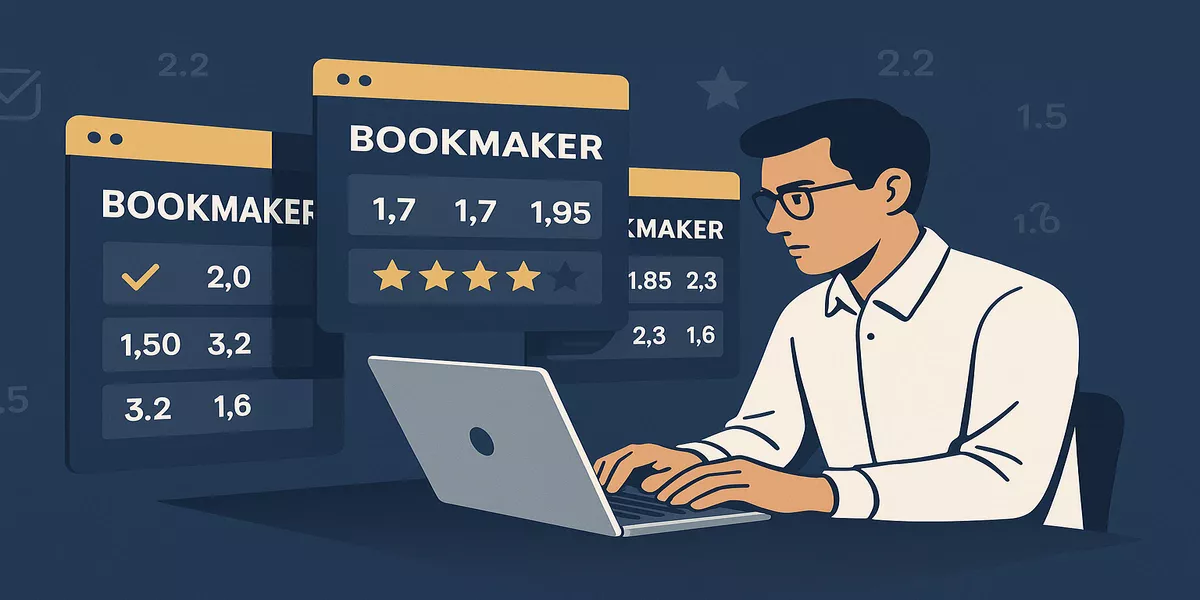
Choosing a bookmaker feels overwhelming when you’re staring at dozens of options all promising the best odds, biggest bonuses, and most reliable service. Every comparison site ranks operators differently depending on who’s paying them affiliate commissions. Every forum has different opinions about which bookmakers are trustworthy and which will restrict your account after your first winning week. The marketing budgets are enormous, the promises are extravagant, and separating legitimate operators from those that will create problems requires more research than most bettors invest before depositing.
The consequences of choosing poorly don’t reveal themselves immediately. You’ll deposit easily, the interface will look professional, early bets will process fine, and everything seems perfectly legitimate until something goes wrong. Maybe you win consistently for a few weeks and suddenly your maximum bet drops from five hundred dollars to twenty without explanation. Maybe you request a withdrawal and it sits in pending status for days while customer service gives vague responses about security reviews. Maybe the odds you were getting initially worsen as the bookmaker realizes you know what you’re doing. By the time these problems surface, you’ve already invested time building your account, learning their platform, and potentially accumulating a balance you now need to extract from an operator that’s making it difficult.
The smarter approach is choosing bookmakers deliberately based on criteria that actually matter rather than whichever operator had the most aggressive marketing campaign or appeared first in search results. This means understanding what differentiates bookmakers beyond surface features, knowing which factors genuinely impact your experience versus which are marketing noise, and matching bookmaker characteristics to your specific betting profile and priorities rather than assuming one operator is universally best for everyone.
This guide provides a systematic framework for evaluating and choosing bookmakers based on factors that determine whether you’ll be satisfied six months from now rather than just impressed during signup. We’ll examine the non-negotiable requirements every bookmaker must meet, the trade-offs between different bookmaker types and business models, how to assess operators for your specific betting style and goals, the due diligence process that reveals red flags before you deposit, and the practical testing strategy that verifies claims before committing significant funds.
2026 Verification Protocol: Licenses and Fund Segregation
Before considering any other factors, certain baseline requirements separate legitimate bookmakers worth considering from operators you should avoid entirely regardless of their other features.
Licensing from a recognized authority represents the absolute foundation. Every legitimate bookmaker operates under a license from some gambling jurisdiction that provides at least minimal regulatory oversight. For US bettors in states with legal sports betting, this means a license from your state gaming commission. For bettors using offshore operators, Curacao licenses are minimum viable legitimacy while UK Gambling Commission or Malta Gaming Authority licenses provide significantly stronger consumer protection. Bookmakers claiming they don’t need licenses or operating under obscure jurisdictions nobody’s heard of are immediate red flags that should disqualify them from consideration. You can verify licenses by visiting the regulatory authority’s website directly and confirming the bookmaker appears in their official registry.
Established track record and positive reputation separate operators that have demonstrated reliability over years from new entrants making big promises without proven execution. A bookmaker that’s been operating for five or ten years and maintains generally positive reputation on betting forums like SportsBookReview or TheRX has survived long enough that they’re probably treating customers adequately. New operators might be perfectly legitimate, but they haven’t proven themselves yet, making them higher risk. Check multiple independent sources for reviews and experiences rather than trusting the bookmaker’s own testimonials or affiliated comparison sites with financial incentives to promote specific operators.
Reliable payment processing with reasonable withdrawal times demonstrates the bookmaker actually pays winners without excessive friction. Read recent experiences from other bettors about how withdrawals were handled. Look for patterns of consistent payout within advertised timeframes versus complaints about delayed or refused withdrawals. A bookmaker can have perfect odds and features, but if they make accessing your winnings difficult, they’re not worth using.
Financial stability ensures the bookmaker can cover customer balances even during periods where they take losses. While you can’t audit their books directly, indicators like being part of a publicly traded company, operating for many years without significant problems, or being licensed by stringent regulators like the UKGC who verify financial reserves provide some confidence. Bookmakers that seem to struggle with withdrawals during busy periods or that have histories of payment delays might be undercapitalized.
Reasonable terms and conditions that don’t give the operator excessive discretion to void bets, close accounts, or refuse withdrawals for vague reasons indicate fair dealing. Read the actual terms and conditions before depositing rather than just clicking through. If the terms are filled with language like “at our sole discretion” or “we reserve the right to refuse service for any reason,” the bookmaker has given themselves legal cover to act arbitrarily. Better operators have clear, specific terms that define expectations for both parties.
These non-negotiables should disqualify bookmakers before you even consider their odds quality, bonuses, or features. An unlicensed operator with sketchy reputation and poor payment history isn’t worth considering regardless of how generous their welcome bonus looks. Start by filtering for basic legitimacy and reliability, then compare the remaining operators on other criteria.

Understanding Bookmaker Business Models
Not all bookmakers operate under the same business model, and understanding these differences helps you choose operators whose interests align with yours rather than conflict with your goals.
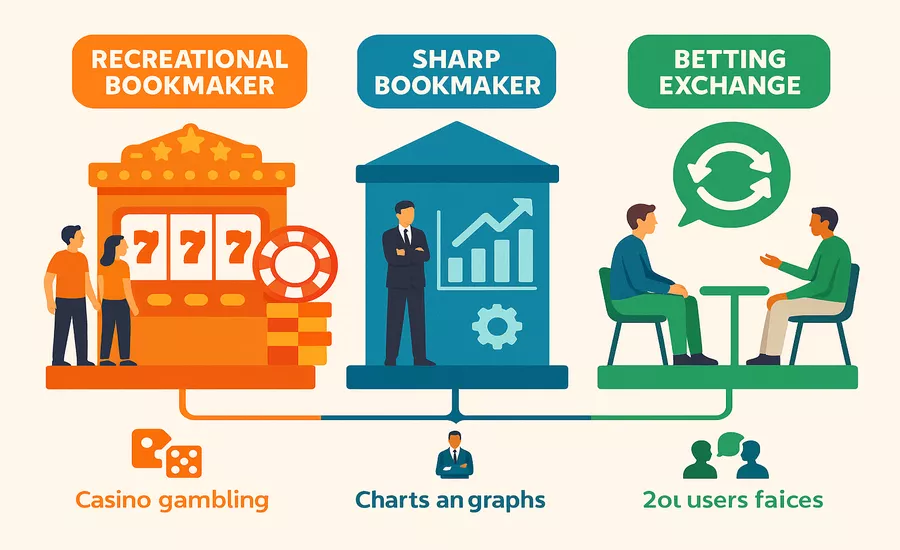
Recreational-focused bookmakers build their businesses around casual bettors who bet for entertainment rather than profit. These operators spend heavily on marketing to acquire customers, offer generous bonuses to attract signups, maintain user-friendly interfaces optimized for convenience, and provide features like same-game parlays and boosted odds that appeal to recreational preferences. The business model relies on customer losses from the built-in house edge across high volume. These bookmakers welcome losing customers and aggressively restrict or close winning accounts because profitable bettors threaten their model. If you’re betting casually for entertainment with modest stakes, recreational-focused books work fine. If you’re betting seriously and might show consistent profits, they’ll restrict you quickly.
Sharp-focused bookmakers target professional and serious bettors who bet large amounts and know what they’re doing. Operators like Pinnacle built their entire business on welcoming sharp action rather than running from it. They offer the tightest odds in the industry with minimal margins, accept large bet sizes, and don’t restrict winning accounts because their model profits from balanced books and volume rather than from customer losses. They use sharp action to set accurate lines, then profit from the vig on both sides. The trade-off is that sharp books typically offer minimal or no bonuses, have more basic interfaces without flashy features, and cater to experienced bettors rather than casual users. If you’re betting seriously and want account longevity, sharp books are essential despite their sparse promotions.
Exchange betting platforms like Betfair operate differently by matching bettors against each other rather than setting odds themselves. You’re betting against other users with the exchange taking a commission on net winnings rather than building margins into odds. This can provide better prices than traditional bookmakers, and exchanges don’t care whether you win or lose since they profit from the commission either way. The downside is that liquidity varies popular markets have plenty of available bets at good prices, but niche markets might have limited options. Exchanges also have steeper learning curves than traditional bookmakers because you’re choosing to back or lay outcomes rather than simply betting on selections.
Regulated versus offshore operators differ fundamentally in their legal status, consumer protections, and operational freedom. Regulated bookmakers operating under your local jurisdiction provide legal clarity, fund protection, formal dispute resolution, and responsible gambling tools mandated by licensing conditions. They also restrict winning accounts aggressively, report your winnings to tax authorities, and maintain higher margins to cover regulatory costs. Offshore bookmakers don’t restrict winners as quickly, offer better odds with lower margins, don’t report to tax authorities, and provide more betting freedom, but they operate in legal gray areas with reputation-based trust rather than enforced consumer protections. Your choice between regulated and offshore operators depends on your priorities around legal protection versus betting freedom.
A critical factor in your decision is the legal status, so always compare licensed vs offshore bookmakers before depositing.
Understanding these business model differences helps you choose bookmakers whose interests align with yours. If you’re a recreational bettor who values convenience and consumer protection over optimal odds, regulated recreational-focused books make sense. If you’re a serious bettor who needs account longevity and sharp prices, offshore sharp-focused operators are necessary despite reduced legal protection. Trying to force your betting style onto a bookmaker with an incompatible business model leads to frustration when they restrict your account or when the features you value aren’t available.
Matching Bookmakers to Your Betting Profile
The best bookmaker for you depends entirely on how you bet, what sports you focus on, how much you wager, and what you’re trying to accomplish. Different betting profiles benefit from different bookmaker characteristics.
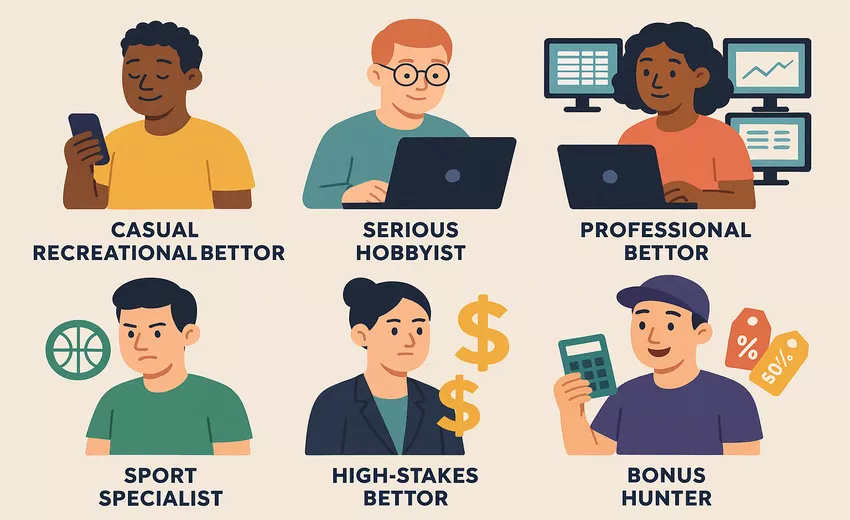
Casual recreational bettors who place occasional small wagers on games they’re watching for entertainment should prioritize convenience, user experience, and consumer protection over optimal odds or account longevity. You’re not betting enough volume for small odds differences to matter significantly, and you’re unlikely to win consistently enough to trigger account restrictions. Choose regulated bookmakers with good reputations in your jurisdiction, intuitive interfaces that make betting easy, responsive customer service, and responsible gambling tools if you want limits or controls. Accept slightly worse odds in exchange for legal clarity and reliable operations.
Serious hobbyist bettors who invest time developing strategies and track results carefully need better odds and account longevity more than flashy features. You’re betting enough volume that odds differences compound into meaningful profit impacts, and if you’re successful, recreational books will restrict you quickly. Include at least one sharp-focused offshore bookmaker in your rotation for better odds and reliable access, even if you also maintain regulated accounts for convenience. Focus on bookmakers known for fair treatment of winning customers rather than those with the biggest marketing budgets.
Professional bettors deriving significant income from betting require offshore operators that welcome sharp action and don’t restrict winning accounts. Pinnacle, BookMaker, and Heritage Sports are essentially non-negotiable inclusions because regulated recreational books will limit you immediately. You need the highest limits, best odds, and most reliable account access available, accepting reduced legal protection and having to handle your own tax reporting in exchange for being able to actually bet seriously. Maintain accounts at multiple sharp books to spread action and ensure access if any single operator encounters problems.
Sport-specific specialists who focus heavily on one or two sports should prioritize bookmakers that excel in those specific markets rather than choosing generalist operators. Soccer bettors benefit from European bookmakers like Bet365 or Asian books like SBOBET that specialize in soccer markets with comprehensive coverage and competitive odds. Tennis specialists might prefer bookmakers with deep tennis markets and competitive pricing on that sport even if their odds on other sports are mediocre. The bookmaker that’s best overall isn’t necessarily best for your specific focus area.
High-stakes bettors wagering thousands per bet need offshore bookmakers that accept large limits and process substantial withdrawals reliably. Regulated recreational books impose limits that make them unusable for serious money. You need operators that can handle five-figure bets without batting an eye and that process five-figure withdrawals smoothly. This immediately narrows your options to established offshore operators with strong reputations and adequate capitalization.
Bonus hunters focused on extracting promotional value need regulated bookmakers in newly legal markets where competition drives aggressive bonuses, combined with the analytical skills to calculate expected value after rollover costs. You’re burning through accounts by design, so account longevity doesn’t matter. Focus on bookmakers with genuinely valuable bonuses that you can clear profitably, accepting that you’ll get restricted quickly.
The key insight is that trying to find one bookmaker that’s optimal for everyone is impossible because different bettors have conflicting priorities. The bookmaker that’s perfect for a recreational bettor in New Jersey betting twenty dollars per game for fun is terrible for a professional in California betting thousands daily for income. Define your betting profile honestly, then choose bookmakers that align with that profile rather than assuming you should use whichever operator has the biggest brand recognition.
The Due Diligence Process
Before depositing at any bookmaker, systematic due diligence reveals potential problems and helps you make informed decisions based on evidence rather than marketing claims.
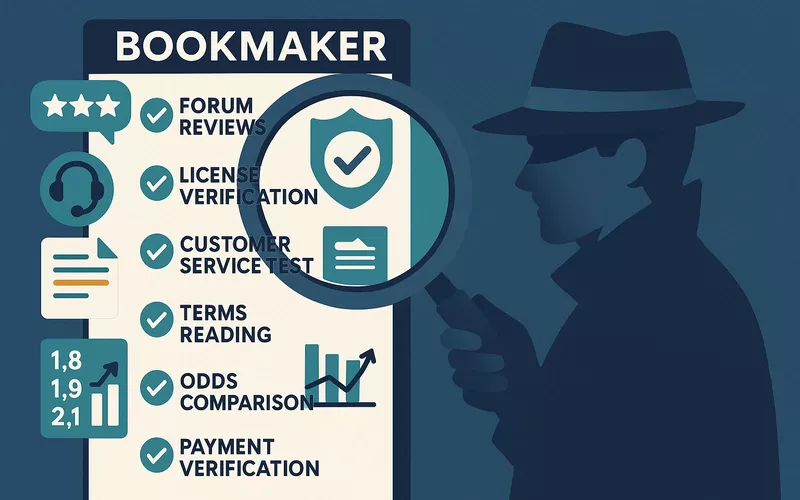
Search for recent user experiences on independent forums and review sites. Look for patterns in complaints rather than focusing on individual negative reviews that might be outliers or sore losers blaming the bookmaker for their own mistakes. If multiple recent posts describe similar problems like withdrawal delays, accounts being limited after minor winning, or customer service being unresponsive, those patterns suggest real issues. Pay particular attention to how the bookmaker responds to complaints do they engage and try to resolve issues, or do they ignore criticism entirely?
Verify the license directly with the regulatory authority rather than trusting what the bookmaker’s website claims. Visit the licensing jurisdiction’s official website, find their licensee registry, and confirm the bookmaker appears with an active license that matches the license number displayed on their site. Fake or expired licenses are occasionally displayed on sketchy sites, so independent verification through the actual regulator eliminates this risk.
Test customer service responsiveness before depositing by asking specific questions via live chat or email. How quickly do they respond? Do they actually answer your questions with specific information, or do they give vague non-answers? Are they knowledgeable about their own terms and policies? Poor customer service before you’re even a customer suggests it will be worse once they have your money.
Read the complete terms and conditions with particular attention to sections about account restrictions, withdrawal procedures, bonus requirements, and dispute resolution. Look for language that gives the bookmaker excessive discretion or that seems designed to create loopholes they can exploit. Compare terms to other bookmakers to identify whether specific provisions are standard industry practice or unusual restrictions that should concern you.
Check their odds on markets you plan to bet by comparing to other bookmakers without creating an account. Most bookmakers display odds publicly, so you can evaluate their competitiveness before signing up. If their odds are consistently worse than alternatives, that impacts your expected value enough to matter.
Research their payment methods and processing times from actual user experiences rather than just the advertised policies. Bookmakers always advertise fast processing, but reality sometimes differs dramatically. What withdrawal methods are actually available? How long do withdrawals really take based on recent experiences? Are there hidden fees not prominently disclosed?
Investigate their history and ownership to understand who’s behind the operation. Established companies with long track records provide more confidence than new operations with anonymous ownership. Public companies have additional transparency and accountability from being regulated by securities authorities beyond just gambling regulators.
This due diligence process takes an hour or two per bookmaker but potentially saves you from depositing hundreds or thousands with an operator that will create problems. The upfront time investment is trivial compared to the frustration and financial risk of choosing poorly.
The Testing Strategy
Even after due diligence, the only way to truly verify how a bookmaker operates is testing them with real money in small amounts before committing your full bankroll.
Make a small initial deposit of fifty to a hundred dollars to test the deposit process and explore the platform. This amount is small enough that losing it wouldn’t be catastrophic if the bookmaker turns out to be problematic, but large enough to actually bet realistically and get a feel for their operation.
Place several bets across different markets to experience their platform, odds, and bet settlement practices. Do bets settle promptly and accurately? Are odds competitive with other bookmakers? Does the interface work smoothly? Are there any suspicious patterns in how bets are graded or settled?
Request a withdrawal before depositing more money. This is the critical test that reveals whether the bookmaker processes payouts smoothly or creates problems. Even if you’re slightly down from your initial betting, withdraw most of your balance to test the process. How long does verification take? Do they request reasonable documentation or invent excessive requirements? Does the withdrawal process within their advertised timeframe? Is customer service helpful if you have questions?
If the withdrawal completes smoothly and everything works as advertised, you can increase your deposit and start betting more seriously. If you encounter problems during this test phase with only a hundred dollars at risk, you’ve learned the bookmaker isn’t worth using before committing significant funds.
Monitor your account status as you bet more regularly. Do you maintain full betting access, or does your maximum bet start decreasing if you show any profitability? Does customer service remain responsive, or do they start becoming difficult to reach? Does the experience remain consistent with your initial testing, or does it degrade once you’re more invested in the platform?
This testing strategy treats your relationship with the bookmaker as provisional until they’ve proven themselves through actual performance rather than just marketing promises. Many bettors skip this testing and deposit hundreds or thousands immediately based on brand recognition or bonuses, only discovering problems when they’ve already accumulated balances they need to extract from problematic operators.
Building Your Bookmaker Portfolio
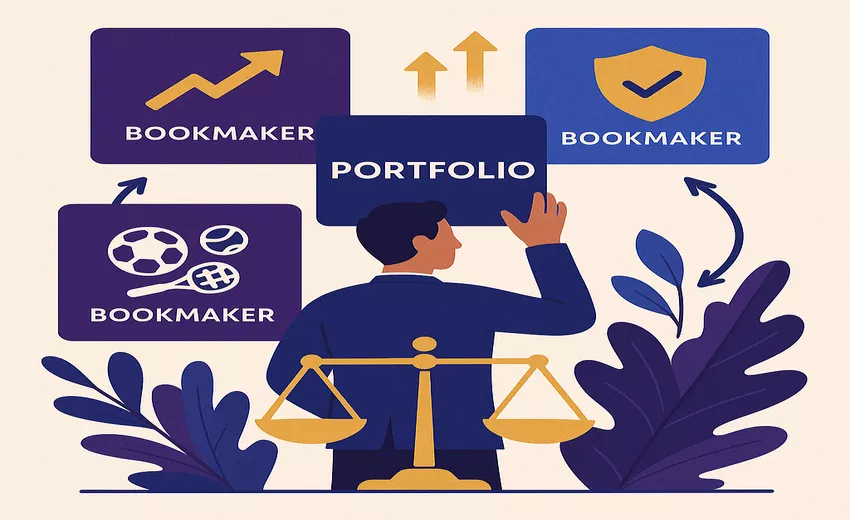
Rather than trying to find one perfect bookmaker, serious bettors maintain accounts at multiple operators to capture advantages from different sources while providing redundancy if problems develop anywhere.
The optimal portfolio typically includes three to five bookmakers for most bettors, providing enough diversity without creating unmanageable account administration. This typically means one sharp book with the best odds like Pinnacle or BookMaker for your serious action, one or two mainstream regulated books for convenience and specific situations where you want legal clarity, and potentially one book known for niche markets you bet if you have sport-specific focus.
Distribute your bankroll strategically across accounts based on which bookmakers you trust most and which you use most frequently. You need sufficient balance in each account to place bets when that bookmaker offers the best odds, but you probably don’t need equal distribution. Keep larger balances with the most trustworthy operators and smaller balances with higher-risk options you’re testing.
Rebalance periodically by withdrawing excess from accounts with large balances and depositing to accounts that have gotten low. This maintenance every few weeks ensures you always have funds available wherever the best odds are rather than being unable to take advantage of good prices because that particular bookmaker’s account is empty.
Document which bookmakers consistently offer the best odds for which sports or bet types so you develop efficient patterns. You’ll probably discover one bookmaker tends to have the best NFL odds, another excels at NBA, and a third occasionally has mispriced props. These patterns let you check the most promising bookmakers first rather than comparing all accounts for every bet.
Accept that different bookmakers serve different purposes in your portfolio rather than expecting every operator to excel at everything. Your sharp offshore book might have terrible customer service and no bonuses but offers the best odds. Your regulated book might have worse odds but provides legal certainty and quick withdrawals. Your niche-focused book might only be useful for specific sports but beats alternatives in those markets. Each fills a role in your overall strategy.
The portfolio approach provides resilience against problems with any individual bookmaker. If one restricts your account, you still have alternatives. If one slows withdrawals, you can shift action elsewhere. If one changes terms unfavorably, you’re not dependent on them. This redundancy is worth the administrative overhead of managing multiple accounts.
Making the Final Decision
Choosing which bookmakers to use ultimately requires balancing multiple factors and accepting trade-offs because no operator is perfect across all dimensions.
Prioritize the factors that matter most for your specific situation rather than trying to optimize everything equally. If you’re a recreational bettor in a legal state, legal protection and convenience probably trump half a percent better odds. If you’re a professional bettor, account longevity and sharp odds matter infinitely more than having a sleek mobile app.
Accept imperfection in operators because every bookmaker has weaknesses. The sharp book with the best odds might have a clunky interface. The regulated book with great customer service might restrict winners aggressively. The offshore book that welcomes your action might operate in legal gray area. Choose bookmakers whose strengths align with your priorities and whose weaknesses are tolerable for you.
Start conservatively with small deposits and limited accounts, then expand as you gain experience and confidence. It’s easier to add bookmakers to your rotation than to extract funds from operators that turned out to be problematic. Begin with one or two well-researched choices, test them thoroughly, then gradually build your portfolio as you identify needs those initial bookmakers don’t serve.
Reevaluate periodically because bookmakers change policies, new operators enter markets, and your own betting profile evolves. What worked when you were betting casually might not work once you’re betting seriously. Markets that didn’t exist when you started might now be available with better options. Revisit your bookmaker choices every six to twelve months to ensure they still serve your needs effectively.
Our mission is to help you find the best bookmaker for a secure and profitable betting journey.
The bookmaker you choose shapes every aspect of your betting experience from the odds you get to whether you can access your winnings. Treat this decision with appropriate seriousness rather than just signing up wherever has the flashiest advertisements. The hour you spend researching and choosing deliberately will pay dividends through better experiences, fairer treatment, and access to your money when you want it for your entire betting career.
