
Bookmaker Payments 2026: Live Speed & Fee Tracker
 Available in US
The moment you want to withdraw your winnings is when you discover whether a bookmaker is legitimate or just another operator with impressive marketing and terrible execution. Deposits are always smooth bookmakers happily take your money through every method imaginable with instant processing and zero friction. But when you try getting your money back out? Suddenly there are verification requirements nobody mentioned during signup, processing delays that stretch from the advertised twenty-four hours to a week or more, restricted withdrawal methods that force you into options you didn’t use for deposits, and mysterious technical issues that somehow only affect withdrawals and never deposits.
The payment experience separates trustworthy bookmakers from sketchy operations more clearly than almost any other factor. A bookmaker can have great odds, generous bonuses, and comprehensive markets, but if they make withdrawing your funds difficult, delayed, or impossible, none of those other features matter. You’re not betting for the intellectual exercise of predicting outcomes you’re betting to make money, and money you can’t access is worthless regardless of how much you won.
This guide examines the reality of payment methods at bookmakers beyond the marketing promises and deposit convenience. We’ll explore which payment options actually work well for both deposits and withdrawals, what verification processes you should expect versus what indicates problems, how processing times really compare across different methods and bookmakers, the fees that eat into your profits, why cryptocurrency has become essential for serious bettors despite the learning curve, and the red flags that suggest a bookmaker will create withdrawal problems before you ever encounter them. By the end, you’ll know exactly what to look for in payment processing and how to avoid the frustration of winning bets but struggling to access your money.
The payment landscape has evolved considerably as sports betting expanded across the United States and as technology introduced new options that didn’t exist a decade ago. Traditional banking methods that worked fine for brick-and-mortar casinos struggle with the cross-border nature of offshore bookmakers. Cryptocurrency that seemed like a fringe experiment has become the preferred payment method for many bettors because it actually works better than traditional options. Understanding what works in practice versus what sounds good in theory is essential to choosing bookmakers and payment methods that won’t create frustrating obstacles between you and your winnings.
Verified 2026 Payout Efficiency by Method
The first thing to understand about bookmaker payments is that deposits and withdrawals operate under fundamentally different incentives and constraints, creating an asymmetry that favors deposits heavily.
Bookmakers want your deposits to be as frictionless as possible because getting money into your account is the gateway to you actually betting. Every obstacle in the deposit process is a chance you’ll change your mind, close the app, and never become a customer. So bookmakers optimize deposits aggressively they accept every payment method they possibly can, they process deposits instantly or within minutes, they don’t ask many questions during the deposit flow, and they make the entire experience smooth and professional. You can deposit via credit card, debit card, bank transfer, PayPal, Skrill, Neteller, prepaid cards, cryptocurrency, and a dozen other methods depending on the bookmaker and your jurisdiction. The money appears in your account immediately in most cases, ready to bet.
Withdrawals face entirely different incentives. Bookmakers don’t make money when you withdraw they make money when you bet and lose, or when you bet and win but the vig they collected on all bets exceeds payouts. Every dollar you withdraw is money they can’t make any edge on anymore. While legitimate bookmakers obviously process withdrawals because it’s required to maintain their license and reputation, they don’t optimize the experience the way they optimize deposits. The result is that withdrawals almost universally take longer to process, involve more verification requirements, offer fewer payment method options, and encounter more mysterious problems that require customer service intervention.
This asymmetry isn’t necessarily evidence of ill intent there are legitimate reasons withdrawals require more scrutiny than deposits. Regulatory requirements for anti-money laundering and know-your-customer compliance force bookmakers to verify that money going out is actually going to the legitimate account holder rather than to someone who compromised your account or is using the bookmaker to launder funds. Fraud prevention measures slow withdrawal processing because bookmakers need to verify that withdrawals aren’t coming from compromised accounts or exploiting some bonus or system vulnerability. Payment processors themselves often have different requirements for money flowing out versus money flowing in based on their own risk models.
But the asymmetry also reflects the simple reality that bookmakers benefit from friction in withdrawals in ways they don’t benefit from friction in deposits. Every day your withdrawal sits in pending status is another day you might change your mind and bet the money instead of withdrawing it. Every annoying verification requirement creates a chance you’ll just leave the balance in your account rather than jumping through the hoops. Every restricted withdrawal method that forces you into options you’re unfamiliar with increases the likelihood you’ll abandon the withdrawal attempt. Bookmakers understand these dynamics, and while regulated operators can’t push too far without risking regulatory problems or reputation damage, they have very little incentive to make withdrawals as smooth as deposits.
The practical lesson is that you should judge bookmakers primarily by their withdrawal experience rather than their deposit convenience. Every bookmaker makes deposits easy that’s table stakes. The ones worth using make withdrawals reasonably straightforward too, processing them within advertised timeframes, requiring verification that’s thorough but not excessive, and actually paying out when you win. The sketchy operations reveal themselves when you try to withdraw, suddenly inventing new requirements or delays that weren’t mentioned anywhere in their terms and conditions.
Traditional Banking Methods
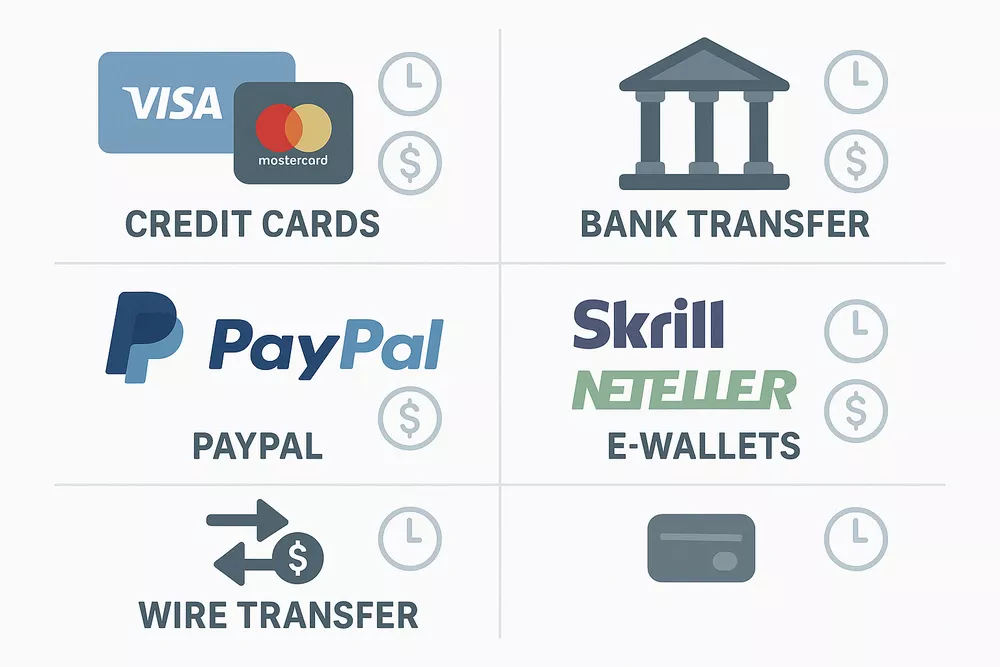
Credit and debit cards remain the most common deposit method at bookmakers because they’re familiar, nearly universal, and instant. You enter your card number, the deposit processes immediately, and you’re ready to bet. The widespread acceptance and convenience make cards the default choice for most recreational bettors who aren’t thinking deeply about payment optimization.
But cards have significant limitations for withdrawals. Many card issuers won’t process transactions from gambling operators at all, treating them as high-risk merchants they prefer to avoid. Of the cards that do work for deposits, only some can receive withdrawals, and the processing times are considerably longer than deposits typically three to five business days rather than instant. The withdrawal gets sent as a credit to your card rather than a direct transfer, which means it goes through your card’s processing systems with their timelines and potential for additional delays.
Card chargebacks represent another complication. Some bettors who lose deposits attempt to reverse the charges through their card issuer, claiming they didn’t authorize the transaction or didn’t receive the service paid for. While these chargebacks are generally fraudulent when used against legitimate gambling transactions, they create risk and administrative burden for bookmakers. As a result, many bookmakers impose additional verification requirements on card withdrawals or restrict them entirely to avoid chargeback risk. You deposited with a card easily, but withdrawing back to that card may require sending photos of both sides of the card, verification that you’re the cardholder, and additional documentation proving your identity.
Fees represent another card downside. While most bookmakers don’t charge fees for card deposits, some do, and withdrawal fees are more common. Even if the bookmaker doesn’t charge fees, your card issuer might treat gambling transactions as cash advances rather than purchases, imposing cash advance fees and higher interest rates if you carry a balance. International transaction fees apply when betting with offshore bookmakers, adding one to three percent to every transaction. These fees compound quickly for active bettors making frequent deposits and withdrawals.
Bank transfers or ACH deposits offer an alternative that works well for larger amounts. Rather than using a card as an intermediary, you’re transferring directly from your bank account to the bookmaker and back. This avoids card issuer restrictions and typically has higher limits than cards, making bank transfers better for bettors moving thousands rather than hundreds. The downside is speed bank transfers for deposits typically take one to three business days rather than being instant, and withdrawals via bank transfer also take several business days to process and clear. For bettors who don’t need immediate access to funds, the slower speed is acceptable trade-off for the reliability and higher limits.
Wire transfers represent the traditional method for large international money movement but have largely been superseded by better options for bookmaker payments. Wire transfers work reliably and can handle large amounts, but they’re expensive with fees from both sending and receiving banks typically totaling twenty-five to fifty dollars per transaction. They’re also slow, taking multiple business days to process. Some offshore bookmakers still use wire transfers for large withdrawals, but most bettors prefer faster and cheaper alternatives.
PayPal and other e-wallets like Skrill, Neteller, Venmo, and Cash App offer middle-ground options that work better than cards or banks in some situations. E-wallets process instantly or near-instantly for both deposits and withdrawals at bookmakers that accept them, avoiding the multi-day delays of bank transfers. Fees are generally lower than cards. The withdrawal experience is typically smoother because the e-wallet handles the identity verification separately from the gambling transaction once your PayPal or Skrill account is verified to their standards, bookmakers accepting those methods can process withdrawals with minimal additional verification.
The limitations of e-wallets are acceptance and regional restrictions. PayPal works with many regulated US bookmakers but refuses to process transactions for most offshore operators, limiting its usefulness. Skrill and Neteller work with more offshore books but aren’t as widely used in the United States as PayPal. Some e-wallets explicitly prohibit gambling transactions in their terms of service, creating risk that your account could be frozen if they detect you’re using it for bookmaker payments. Fees vary by e-wallet and transaction type, with some charging percentages and others charging flat fees.
Cryptocurrency: The Game Changer

Cryptocurrency, particularly Bitcoin, has emerged as the superior payment method for bookmaker transactions despite the learning curve and unfamiliarity for bettors who haven’t used it before. The advantages are substantial enough that many serious bettors have overcome their hesitation and made crypto their primary deposit and withdrawal method.
The speed advantage of cryptocurrency is dramatic. Bitcoin deposits typically confirm within ten to thirty minutes depending on network congestion, faster than bank transfers and comparable to cards. But withdrawals are where crypto really shines many offshore bookmakers process Bitcoin withdrawals within an hour or two, with some processing within minutes. Compare this to three to five business days for card withdrawals or similar delays for bank transfers, and the time advantage is massive. When you win a bet and want access to your money, getting it in your wallet within an hour versus waiting nearly a week makes an enormous difference in cash flow and flexibility.
Fees for cryptocurrency transactions are generally lower than traditional payment methods. Bitcoin network fees vary based on congestion but typically range from one to five dollars per transaction regardless of amount. This is dramatically cheaper than wire transfer fees of twenty-five to fifty dollars, and more predictable than card fees that may include cash advance charges and currency conversion costs. Some bookmakers absorb Bitcoin withdrawal fees entirely as a customer service feature, making crypto withdrawals completely fee-free. Even when fees apply, they’re usually more favorable than alternatives.
Privacy represents another cryptocurrency advantage. While Bitcoin isn’t truly anonymous the blockchain is public and transactions can potentially be traced it does provide more privacy than bank transfers or cards that directly connect your identity to the transaction. You’re sending crypto from your wallet to the bookmaker’s wallet with no bank or card issuer reviewing the transaction and potentially declining it because they disapprove of gambling. This privacy also means less data shared with the bookmaker they know you sent Bitcoin, but they don’t need your bank account details, card number, or other financial information that creates identity theft risk if their systems are breached.
No chargeback risk makes cryptocurrency attractive to bookmakers, which translates to better treatment for customers. When you send Bitcoin, the transaction is final there’s no mechanism to reverse it the way card chargebacks work. Bookmakers love this because it eliminates fraud risk, and in return they’re often willing to process crypto withdrawals with less verification hassle and faster timelines. You’re a lower-risk customer when paying with crypto.
The learning curve is the primary barrier preventing more bettors from using cryptocurrency. You need to set up a crypto wallet, which means learning new concepts like public keys, private keys, and wallet security. You need to acquire cryptocurrency through an exchange like Coinbase or Kraken, which requires creating another account and going through their verification. You need to understand how to send crypto safely without losing funds through address errors or other mistakes. This is genuinely more complex than entering a card number, and many bettors bounce off the learning curve despite the advantages waiting on the other side.
Volatility represents another consideration though less of a problem than many assume. Bitcoin’s price fluctuates considerably, and in theory this creates risk you could deposit one Bitcoin worth five thousand dollars, and by the time you withdraw it might be worth forty-five hundred or fifty-five hundred. In practice, most bettors deposit crypto, bet relatively quickly, and withdraw winnings fairly soon, limiting exposure to price movements. Some bookmakers let you lock in the dollar value of your deposit, crediting your account with the dollar amount rather than the Bitcoin amount, eliminating volatility risk during your betting session. For bettors holding crypto long-term for investment reasons, the volatility is something they’re accepting anyway and bookmaker transactions don’t materially change the risk profile.
Different cryptocurrencies offer different trade-offs. Bitcoin is most widely accepted and most liquid but has higher fees and slower confirmation times than some alternatives. Litecoin offers faster confirmations and lower fees but is less widely accepted. Ethereum works well for some purposes but has variable fees that can spike during network congestion. Stablecoins like USDT (Tether) or USDC eliminate volatility by being pegged to the US dollar, combining the speed and privacy benefits of crypto with price stability, though fewer bookmakers accept them. The best approach is typically to use whatever cryptocurrency the bookmaker accepts that you’re most comfortable with, with Bitcoin being the safe default due to universal acceptance.
Verification Requirements
Every legitimate bookmaker requires identity verification before processing withdrawals, but the extent and reasonableness of these requirements vary enormously between operators.
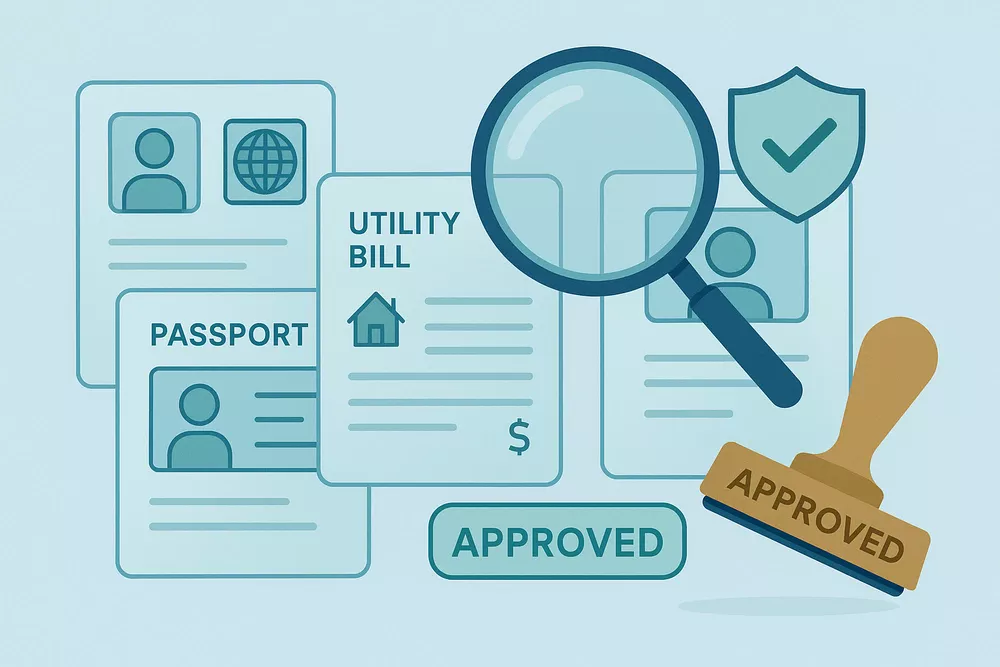
Standard verification that you should expect from any licensed bookmaker includes proof of identity via government-issued photo ID like a driver’s license or passport, proof of address via recent utility bill or bank statement showing your name and address within the last three months, and proof of payment method via photos or screenshots of the card or account used for deposits. This level of verification is required by anti-money laundering and know-your-customer regulations, and refusing to provide it will prevent you from withdrawing at any regulated bookmaker. The process is annoying but not unreasonable.
The timing of verification requests matters significantly. Better bookmakers request verification during account creation or first deposit, before you’ve accumulated any significant balance. This is far preferable to bookmakers that let you deposit freely and only request verification when you try to withdraw. The latter approach feels like a bait-and-switch where they were happy to take your money instantly but suddenly need extensive verification before giving any back. While the verification requirements themselves might be identical, the timing creates very different customer experiences one feels like normal process, the other feels like stalling.
Excessive verification requests beyond standard requirements suggest problems. Some sketchy bookmakers invent new verification demands when you try to withdraw, particularly if you’ve won significant amounts. They might ask for utility bills from multiple addresses if you’ve moved recently. They might request bank statements covering longer periods than necessary. They might demand verification calls where you need to prove your identity over the phone. Each new requirement creates delay and friction, and if you can’t satisfy every demand, they can refuse your withdrawal. Legitimate bookmakers complete verification with standard documentation. Operators inventing new requirements after you’ve won are often looking for excuses to avoid paying.
Document quality standards represent another area where reasonableness varies. Legitimate verification requires clear photos where text is readable and all four corners of documents are visible this is fair because they genuinely need to verify the documents aren’t tampered with and information is accurate. Unreasonable operators reject photos for tiny issues slight shadow on part of the document, one corner barely cut off, photos taken with phone rather than scanner that feel like excuses to delay rather than legitimate quality concerns. Multiple rounds of document rejection for minor issues that should have been accepted on first submission indicate problems.
The solution to verification friction is handling it proactively. Complete verification immediately upon account creation, before depositing any money. Take high-quality photos of required documents, making sure everything is clear, well-lit, and complete. Keep these photos organized in a folder so you can quickly submit them to new bookmakers as needed. Proactive verification eliminates the delay and stress of waiting for verification to complete when you’re trying to withdraw winnings.
Processing Times Reality
Advertised processing times for withdrawals are often aspirational rather than realistic, and understanding what to actually expect helps you plan accordingly and identify when delays exceed reasonable bounds.
Offshore bookmakers typically advertise withdrawal processing within twenty-four to seventy-two hours. In practice, this means your withdrawal request sits in pending status for that period while they review it, then if approved, it moves to processing through the payment method, which adds additional time. So a bookmaker advertising twenty-four hour processing might mean you submit your withdrawal Monday morning, it gets approved Tuesday morning, the payment gets sent Tuesday afternoon, and the money arrives in your account Wednesday or Thursday depending on payment method. Total time from withdrawal request to funds available is three to four days, not one day, even though they met their advertised twenty-four hour processing timeline.
Regulated US bookmakers face more oversight and often process withdrawals faster than sketchy offshore operators, but they’re also dealing with more regulatory burden. Withdrawals at major operators like DraftKings or FanDuel typically process within one to three business days depending on payment method, with e-wallet withdrawals faster than bank transfers. The advantage is reliability if they say three days, it’s almost always three days, not a week. Offshore books might be faster when everything goes smoothly, but they’re less consistent.
Cryptocurrency withdrawals at bookmakers that prioritize crypto operate on completely different timelines. The best crypto-friendly operators process withdrawals within an hour or two as a standard practice. A few process within minutes. Even slower crypto operators typically complete withdrawals same-day. This speed advantage is so dramatic that it changes how you interact with the bookmaker you can withdraw after winning sessions rather than leaving balances sitting in accounts, reducing risk if the bookmaker encounters problems.
First withdrawal delays are common and usually acceptable. Most bookmakers take longer processing your first withdrawal than subsequent ones because they’re completing verification, reviewing your account history more carefully, and ensuring everything is legitimate before establishing you as a trusted customer. If your first withdrawal takes three or four days but subsequent withdrawals process in one or two, that’s reasonable. If every withdrawal takes just as long as the first, the bookmaker isn’t actually learning to trust you, which might indicate systemic slowness or intentional friction.
Weekend and holiday delays affect processing because most bookmaker payment departments don’t operate twenty-four seven. Submit a withdrawal Friday evening, and processing might not start until Monday morning, adding two days to the timeline regardless of advertised processing times. Submitting withdrawals earlier in the week during business hours generally results in faster processing than late-week or weekend requests.
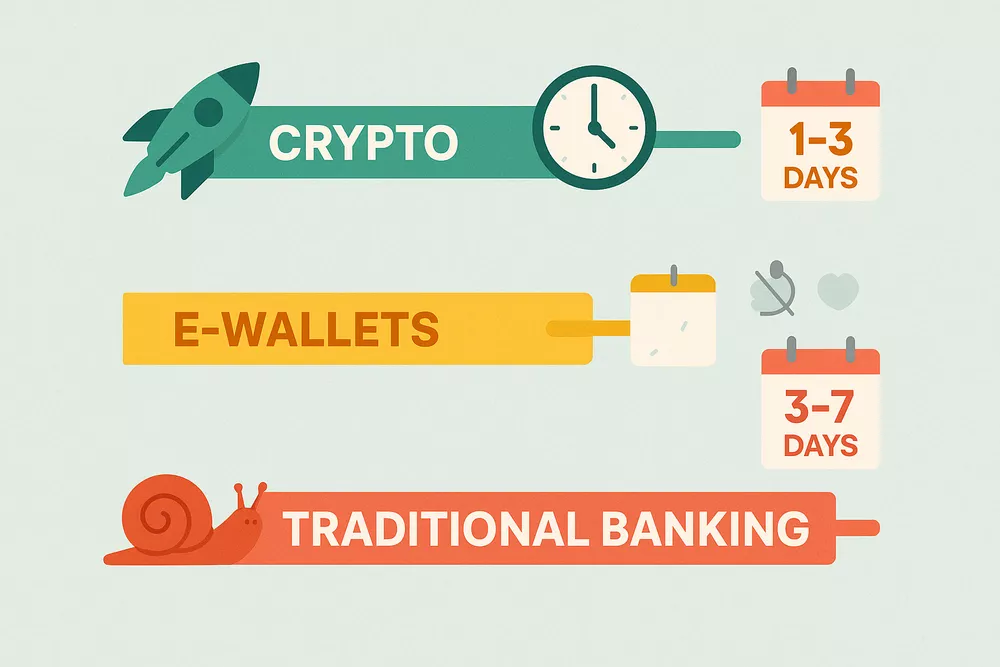
Payment method speed variations mean your choice of withdrawal method impacts total time significantly. Crypto withdrawals process fastest, e-wallets process in one to three days typically, cards take three to five business days, bank transfers take three to five business days or more. Choosing faster methods when available speeds your access to funds materially.
Fees That Eat Your Profits
Payment fees aren’t always clearly disclosed upfront, and they can consume significant portions of your profits if you’re not careful about which methods you use and how frequently you transact.
Withdrawal fees vary enormously by bookmaker and payment method. Some bookmakers charge no withdrawal fees for any method, treating payment processing as a cost of doing business. Others charge flat fees like fifteen to fifty dollars per withdrawal depending on method. Some charge percentage-based fees like one to three percent of the withdrawal amount. The bookmaker’s fee structure should be clearly stated in their terms and conditions, but it’s often not prominently displayed during account creation, meaning many bettors don’t discover the fees until they try to withdraw.
Currency conversion fees apply when betting with offshore bookmakers while using non-USD payment methods, or when betting at US bookmakers while using non-USD accounts. These fees are often hidden in poor exchange rates rather than disclosed as explicit fees. The bookmaker might claim no fees while giving you an exchange rate five percent worse than the current market rate, effectively charging a five percent fee without calling it that. If you’re dealing with currency conversions, check the rates you’re getting versus market rates to understand true costs.
Payment processor fees come from intermediaries even if the bookmaker doesn’t charge fees themselves. Your bank might charge fees for incoming transfers. Your e-wallet might charge fees for withdrawals to your bank account. Your card issuer might charge cash advance fees. These aren’t technically bookmaker fees, but they’re costs of the payment flow that reduce your net proceeds.
Cryptocurrency fees are generally lower than traditional methods but not zero. Bitcoin network fees fluctuate based on blockchain congestion, typically running one to five dollars per transaction. Some bookmakers absorb these fees, others pass them through to customers. Crypto exchange fees apply when converting crypto back to fiat currency in your Coinbase or Kraken account these are typically around one percent of the transaction value.
Inactivity fees are a sneaky charge some bookmakers impose if your account sits dormant for extended periods. You might deposit, bet for a while, then not touch the account for six months. Some operators charge monthly maintenance fees after ninety or a hundred eighty days of inactivity, slowly draining your account balance. These fees are always disclosed in terms and conditions but rarely prominent. The solution is either keeping accounts active with occasional bets or withdrawing your full balance if you plan to take extended breaks.
Free withdrawal limits represent a middle ground some bookmakers use. They might offer one or two free withdrawals per month, then charge fees for additional withdrawals. This encourages bettors to make fewer, larger withdrawals rather than frequent small ones, reducing the bookmaker’s transaction processing costs. If you’re within the free withdrawal limit, no problem. If you exceed it, fees apply that might not have been obvious.
Red Flags in Payment Processing
Certain warning signs in a bookmaker’s payment practices suggest you’ll encounter withdrawal problems, and recognizing these red flags before depositing helps you avoid frustrating situations.
Missing or vague payment information on the bookmaker’s website is the biggest red flag. Legitimate bookmakers clearly explain accepted deposit and withdrawal methods, typical processing times, any fees, and verification requirements. If this information is hard to find, vague, or missing entirely, the bookmaker is either incompetent or hiding problematic policies. Either way, avoid depositing.
Reports of consistent withdrawal delays or non-payment on forums like TheRX, SportsBookReview, or relevant Reddit communities indicate systemic problems. Every bookmaker accumulates some complaints from customers who violated terms or had legitimate verification issues, but patterns of similar complaints about withdrawal delays, invented requirements, or funds being held without explanation signal serious problems. Search for the bookmaker’s name plus “withdrawal problems” before depositing to see what experiences others have had.
Terms and conditions giving the bookmaker excessive discretion to delay or refuse withdrawals for vague reasons like “security reviews” or “fraud prevention” without specific criteria create legal cover for arbitrary payment denials. Legitimate bookmakers have clear terms explaining when withdrawals might be delayed and what’s required to resolve issues. Terms that essentially say “we can refuse withdrawals for any reason at our discretion” should make you extremely skeptical.
Requiring excessive documentation beyond standard verification like multiple forms of ID, notarized statements, video verification calls, or proof of funds source for deposits suggests the bookmaker is either paranoid to an unreasonable degree or creating barriers to paying out. Standard verification is reasonable. Demands for extensive documentation that banks and regulated businesses don’t require are not.
Pushing customers toward specific payment methods that benefit the bookmaker rather than offering flexibility indicates misaligned priorities. If a bookmaker strongly encourages deposits via methods that are convenient for them but makes withdrawals difficult or impossible via those same methods, they’re optimizing for getting your money in rather than getting your money out. Bookmakers should accept deposits and withdrawals via the same methods.
Very long advertised processing times like seven to fourteen business days for withdrawals signal either operational incompetence or intentional delay tactics. Modern payment processing doesn’t require two weeks. Bookmakers advertising these timelines are either understaffed, poorly organized, or hoping you’ll reverse your withdrawal and bet the money instead.
How to Optimize Your Payment Strategy
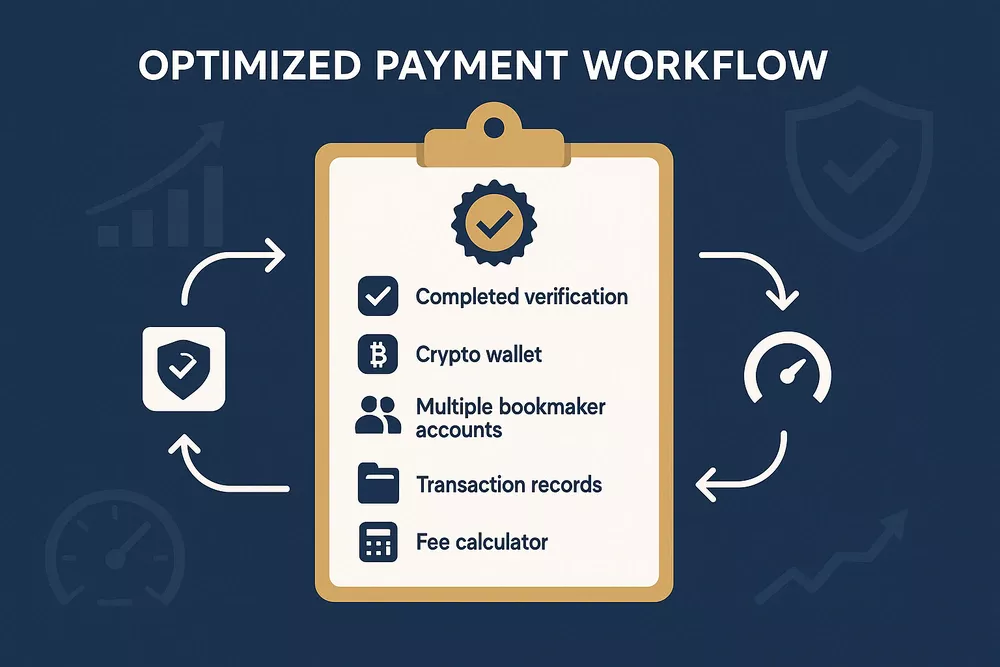
Smart payment strategies reduce costs, speed access to funds, and minimize withdrawal headaches through deliberate choices about which methods to use and how to structure your transactions.
Complete verification immediately upon account creation rather than waiting until you need to withdraw. Take clear photos of required documents and submit them proactively. This eliminates verification delays when you actually want your money, and it reveals any verification problems early when you haven’t yet accumulated a significant balance.
To maximize your initial bankroll, look for sites that offer the most competitive bookmaker bonuses and promotions.
Choose payment methods based on total cost including all fees and speed considerations, not just deposit convenience. Cards are easy for deposits but slower and sometimes more expensive for withdrawals. Crypto has a learning curve but offers better speed and lower costs for active bettors. Calculate total fees for your typical transaction patterns and choose methods that minimize costs.
Finding reliable betting platforms is easier when you use our systematic comparison tools.
Maintain accounts at bookmakers with good payment reputations even if odds or other features aren’t quite as good as competitors. The best odds in the world don’t matter if you can’t withdraw your winnings. Reliable payment processing is non-negotiable and worth accepting slightly worse odds to ensure you can actually access your money.
Minimize transaction frequency to reduce fee exposure if the bookmaker charges per transaction. Make fewer, larger deposits rather than frequent small ones. Let balances accumulate before withdrawing rather than withdrawing after every winning session. This reduces total fees paid over time.
Keep payment records including deposit confirmations, withdrawal requests, and communications with customer service about payments. If problems arise, documentation proves your case and helps resolve disputes. Screenshots of transactions and saved emails create a paper trail that protects you.
Test withdrawals with small amounts at new bookmakers before depositing large sums. Deposit fifty or a hundred dollars, bet a bit, then request a small withdrawal to verify the process works smoothly. This costs minimal risk while revealing how the bookmaker actually handles withdrawals in practice rather than just their advertised policies.
Diversify across multiple bookmakers so you’re not dependent on any single operator’s payment processing. If one bookmaker suddenly slows withdrawals or creates problems, you have alternatives that still work. This redundancy protects you from being stuck if a bookmaker encounters issues.
Use cryptocurrency for offshore bookmakers where it’s clearly the superior option, and traditional methods for regulated bookmakers where banking integration works reliably. Match your payment method to the bookmaker type and regulatory status rather than using the same approach everywhere.
The payment method you choose and how you structure your transactions has enormous impact on your practical betting experience. The difference between getting withdrawals processed in hours versus days, paying minimal fees versus substantial percentages, and encountering smooth processes versus constant friction determines whether betting remains enjoyable or becomes frustrating. Treating payment strategy as seriously as handicapping or odds shopping is essential to sustainable, profitable betting where you can actually access your winnings when you want them.
